
The Alien Heptalogy (Various)
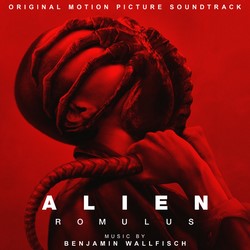
We’ve been screaming a lot since 1979. Not that anyone could hear us. Not in space anyway. The reason for those screams? The xenomorph. A perfect organism intent on killing. The Alien franchise, because that’s what I’m talking about, now has its seventh entry: Romulus. Rather than simply reviewing the last entry, let’s have a look at the whole series so far.
Alien (1979)
It began in 1979 with Alien, directed by Ridley Scott with a score by Jerry Goldsmith. The working relationship between Scott and Goldsmith was, let’s say, strained. A lot of what Goldsmith wrote didn’t make the final cut, and what did make it was music from the temp track, Freud, which was at least also written by Goldsmith. There’s a lot to unpick here, but it has been unpicked by others many times, so I’m going to conveniently step over all of that.
I think there are three key takeaways from Goldsmith’s score, 1: the echoing time motif, predominantly in the woodwinds, achieved by using a device called an echoplex (or tape delay, same thing). This really has become the signature sound or motif of the franchise. It has transcended this movie and has become a meta-theme bringing together seven movies over forty-five years, or indeed seven stories spanning several centuries. It’s representing time within and outside of the movies. I guess the reason this motif works so well is because it is a motif, a technique even, rather than a melody; representing the passing of time, a concept rather than a specific place or character. As a result it can be applied anywhere, tying things together musically at a conceptual level, without the fear of it belonging to one movie specifically. It is also the franchise’s one and only truly original and unique feature. No matter how hard any composer has tried to bring something new and original to their respective film, I don’t think anything matches this echo motif.
The second element from Goldsmith’s score is his lush trumpet theme, which sounds romantic yet lonely at the same time. It’s even kinda creepy, but it’s hard to explain why. It has a sense of longing, but also anticipation. Combined with the echo motif, you just can’t be sure if it’s something good you’re anticipating. This theme really is for the Alien movie though it is referenced in Prometheus (for a specific reason); used to a greater extent in Covenant (it’s even listed as the ‘main theme’ on the album’s tracklist); and also makes an appearance in Romulus.
Thirdly, and this is something that Goldsmith intended to do, but Scott rejected, is to create a false sense of beauty and security before all hell breaks loose. Back in those days sci-fi was largely about optimistic visions of the future. Alien was going to shatter that happy-clappy approach, but Goldsmith didn’t want to give the game away too quickly, painting a quasi-romantic picture of space travel before alien eggs and facehuggers enter the story. In Aliens James Horner was also able to incorporate some sensitivity into his score thanks to the motherly relationship between Ripley and Newt. Elliot Goldenthal had religious undertones to play with in Alien 3 giving his score emotional depth beyond the horror. Later sequels I think are more conventional thriller/horror scores.
Austerity may be the only thing that Scott and Goldsmith agreed on. Both the movie and its score are slow burners. There isn’t a lot of dialogue, there aren’t that many shots of the alien, and the music remains low key when it can. It builds tension, and when things eventually do kick off, it’s all the more effective. It’s why I love Alien. It doesn’t over-explain, it just…unfolds. Subsequent movies have sadly been less subtle and I think Prometheus especially suffered from over-exposition, but more about that later.
Aliens (1986)
In contrast, James Cameron and James Horner went hell for leather on Aliens. More monsters, more fighting, and more music. Horner kept Goldsmith’s echo motif, though may have flipped it upside down, but now that we know what we’re in for, there’s no point in creating any false sense of safety. Horner’s score opens with dark tones and clusters, turns into one of the most aggressive action scores he’s ever written (he was probably imagining what he’d like to do Cameron) and concludes peacefully with a tune so serene it almost feels out of place.
Mirroring the director-composer relationship of Alien, Horner and Cameron also didn’t get along. Cameron was still shooting scenes when Horner should’ve started scoring, ultimately leaving the composer very little time to crank out his score, which understandably owes a bit to his earlier Wolfen and Star Trek II. Despite the challenges Horner created at least two incredible set pieces. The first being “Futile Escape”, a lengthy, turbulent, aggressive and relentless action cue. The other, “Bishop’s Countdown”, was so striking in building to a climax, that it served in countless movie trailers for many years. Horner received an Academy Award-nomination, the only Oscar-nomination for a score in the franchise; though Goldsmith won a Bafta award for his work and received a Golden Globe nomination. Alien and Aliens are the only two movies from the franchise that received any awards or nominations for their music.
Alien 3 (1992)
Any hope that remained at the end of Aliens, with regards to the remaining characters, was squashed by David Fincher in the opening scenes of Alien 3. Two of the tree survivors are now dead, and the last woman standing has an alien onboard. Stranded on a planet that serves as a prison for the most hardened criminals who’ve now found God at the arse-end of space, Ripley has to face the beast once again, whilst everyone around her serves as bait. Studio interference meant that Fincher couldn’t make the film he wanted, and the result is a flawed movie. But I have a soft spot for it. On the special edition releases of Alien 3 you can find a director’s cut of sorts, which provides a glimpse of what Fincher had in mind and, whilst it’s tough to watch because none of the film and sound are properly finished, it’s better and makes more sense than the theatrical release.
Music for Fincher’s directorial debut is by Elliot Goldenthal who himself was still relatively new to Hollywood. His approach is more operatic and classical than its predecessors and there are religious undertones, seeing as these criminals have seemingly found faith. Whilst Goldenthal’s action music is great and incorporates subtle electronica and interesting sound effects, it’s the elegiac side of the score that commands the most attention. It’s effectively a requiem for Ripley as she eventually plunges into a smelting furnace to prevent her baby chestburster from escaping. The score failed to pick up any award nominations, though it has become a fan favourite; and is my favourite Goldenthal score.
Alien: Resurrection (1997)
Even within this fictional universe, Alien Resurrection challenges our ability to suspend our disbelief by resurrecting the formerly deceased Ripley. A scruffy crew that I cared even less about than the murderous rapists from Alien 3 enter a spaceship to deliver some goods and stock up on stuff. On this spaceship, experiments are being done on xenomorphs; and they are understandably fed up, escape (a fantastic scene, in my opinion) and kill pretty much everyone on board. At the time, a lot of fuss was made about Jean-Pierre Jeunet being the director. He brought a certain quirkiness to this universe, more so in his characters than in the set design; though some of that quirkiness may have bled through into the score’s electronics. It’s an entertaining movie and super-human Ripley is pretty cool, but I can’t stand some of the other ‘quirky’ characters and the ending (with the ‘newborn’ alien) is just god-awfully stupid. That said, it has a few memorable action scenes.
The score is by John Frizzell who, I think, was a James Newton Howard protégé, having collaborated on Dante’s Peak. He delivers a score that is part straight-up action (“The Aliens Escape” and “They Swim” are pretty cool with a macho action motif) and part weird electronics. The synths are some of the most outlandish I’ve heard in these movies. There’s something quite nauseating about them, they’re ratch-y and bubbly, quite unpleasant and yet seem to fit right in! Resurrection also has a delicious main theme that oozes sensuality and mystery. This theme really elevates an already descent score; and is arguably much better than the movie deserves. The echo motif makes a muted appearance in “Docking the Betty”, in so much that there is a see-sawing motion in the strings rather than an actual echoplex effect. There’s a lot to like in Frizzell’s work and to this day I still revisit it. I would liked to hear Frizzell’s theme return to the franchise, but when you think about it… the next set of movies are all set either before Alien or in-between Alien and Aliens, so referencing Resurrection would make no sense (but then, neither would referencing Goldenthal’s work). Hmm….much to ponder!
Prometheus (2012)
Prometheus saw Ridley Scott return to the director’s chair and having worked with Marc Streitenfeld a few times before, brought him along. The movie itself I believe is a flawed masterpiece. It has some great ideas that needed more time to explore, but it also has some of the dumbest characters I’ve seen…ever. I mean, the scene with the snake…really? With smarter characters, less exposing dialogue (Alien was so good at just shutting up and letting it all happen) and an extra half hour of proper development I think this movie could have been great.
As for Streitenfeld’s score, I genuinely believe it’s good. I really dig his main theme which reaches a satisfying climax during “Collision”, his use of flute and electronica works great and I feel the overall sound and style fit this universe. It may be that orchestrator Ben Foster had a bit of an influence on the score, but whatever… I like this score. Whether by design or coincidence, some of the electronic sounds feel like successors to Frizell’s creations. The use of reversed sounds and throbbing arpeggios works well to create tension. Scott must still have had some issue with the score and got Harry Gregson-Williams to write an additional theme that sort-of signifies life and Earth. There’s a part of me that thinks this was unnecessary, but…it’s a wonderful little piece of music. It makes me wish HGW had scored the whole film, even though I think Streitenfeld did a good job. Like Resurrection, the score is sparse with call-backs. Goldsmith’s main theme is quoted in “Friend from the Past” and there’s a faint echo motif in “Weyland”, but that’s it really.
Alien: Covenant (2017)
Jed Kurzel is the composer for the next entry Covenant. This was a surprising choice. Why did Scott not stick with Streitenfeld or HGW (though the latter was briefly attached to the movie)? I’m no fan of Kurzel and I’m still baffled as to how he got this gig, but… his Covenant is nowhere near as bad as I thought it was going to be. I’m sorry for putting it so bluntly. In fact, he is pretty reverential of Goldsmith’s Alien and quotes it several times; as well HGW’s theme from Prometheus. Beyond that, I don’t remember much of the score now (whereas I can still hum the themes for all previous movies). Occasionally there are moments of surprising beauty, for example when the score turns Goldsmithian in “Planet 4/Main Theme” or “The Covenant”. It’s interesting, somewhat, that Goldsmith’s theme is actually credited as the main theme. There’s is also a lovely little piano cue called “Chest Burster”, which plays against type and is beautiful. Yet, these cues feel out of place on an album that is largely filled with sound design and fairly standard thriller music. That said, I don’t blame Kurzel. I think Covenant, the movie, is the least interesting entry in the series; and I’m not sure what any composer could have don’t with it.
Alien: Romulus (2024)
And that brings us to 2024’s Fede Alvarez-directed Alien: Romulus. The composer, again rather unexpectedly is Benjamin Wallfisch, because Alvarez usually works with Roque Banos. Wallfisch once started out orchestrating lovely music for Dario Marianelli then moved on to work alongside Hans Zimmer whilst developing an impressive ‘solo’ career. He’s written beautiful scores such as The Starling, Mully and Bitter Harvest, synth fest Blade Runner 2049, and horror scores such as Annabelle: Creation, and most notably It chapters one and two. Wallfisch is a formidable composer and orchestrator so my expectations were sky high for Romulus. Those expectations were not fully met.
I’ve read many reviews of the movie saying that ‘where it’s good, it’s great and where it’s not, it’s bad’. I feel similar about the score. It’s get a lot of things right. The overall sound and style fits nicely in the Alien universe. There are various call-backs to really cement it in this anthology. There is, of course, the echo motif that appears in various places, not just woodwinds. There’s a deliberate quotation of Gregson-Williams’ “Life” theme from Prometheus, and I’d like to believe there’s some harmonic nods to Streitenfeld’s work (in “Prometheus Fire”, and maybe “Searching”). There are also harmonic and orchestration similarities to Goldenthal’s Alien 3. Wallfisch has said in several interviews that he aimed to ‘honour the scores by Goldsmith, Horner, Goldenthal and the rest‘. I think he’s succeeded in terms of style. If it’s obvious call-backs you’re after, those are limited to Alien and Prometheus.
One of my initial criticisms of the score was that I couldn’t recognise any main theme specifically for this movie; and it bothered me. After a few listens I finally picked up on a 4-note motif for Raine, a bit like an ‘agnus dei’. In a feature about the score, Wallfisch explains he’s got three themes that are all interwoven. There is the aforementioned 4-note theme for Raine (also associated with the sunrise); then there’s a theme for Andy, which is Raine’s theme played backwards; and there’s a theme for the aliens which is Raine’s theme with a fifth note added. Now, there’s interweaving and then there is… this. I’m not sure about this approach. To me these are all variations on the same theme, adjusted for different set-pieces. I’m not sure how you can differentiate between different characters with themes that are only one note apart. In a wildly extreme and exaggerated case this would mean that when the alien theme plays, by note 4 I’m thinking of Raine, but then there’s the fifth note and I now need to adjust my thinking. The fact that I have to actively observe whether I just heard 4 or 5 notes, is an unnecessary distraction. To me, this approach actually suggest something very different altogether, a very different movie altogether in which everything is a manifestation of Raine’s imagination.
Where the score struggles the most for me is during the quiet, introspective moments. Wallfisch relies on rather lush string writing, but a lot of it feels slow and laboured. I can’t fault it technically, but to me it feels like Wallfisch is working really hard to achieve something that felt so effortlessly coming from Goldsmith and Goldenthal. I think Wallfisch over-produced his score; there are so many layers of orchestra, electronics and sound effects aiming to blend the familiar with the alien, and whilst I appreciate the sentiment and the effort, it makes for an incredible dense sounding score where most of the others still had an airiness about them. At times Romulus is incredibly busy and noisy, almost to the point of being unlistenable (“The Offspring” comes to mind). Wallfisch is piling up the whooshes and stingers and distortion effects, but it does nothing for me. From racing strings to layers of sound effects and even choir, Wallfisch is throwing absolutely everything at it. It’s almost too much, like using a sledgehammer to kill a fly, even if said fly is a murderous, space-travelling xenomorph.
That said, when it’s good it is great. The echo motif appears in various places. There’s even the odd tubular bell. There are Ligeti-esque moments for choir. There are some absolutely terrific action set piece such as “There’s Something in the Water”, “Guns v Acid Blood”, the absolutely riveting “Elevator Shaft Attack” and the wonderfully epic (and Goldenthalesque) “Raine”. Overall I think Romulus a solid score. One that is growing in me with each listen…
Article by Pete Simons (c) 2024 Synchrotones

 Synchrotones' Soundtrack Reviews
Comments are closed.